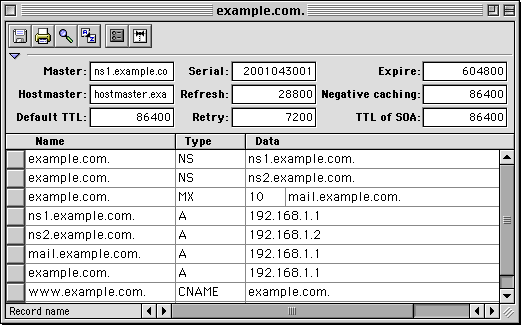
This is an extremely common zone configuration. This zone has two name servers and a mail server. There are 8 resource records; let’s review them top to bottom.
However, before we begin, note that each of these records uses a fully qualified domain name, which means that after the top level domain they end with a "." as in "example.com."
Lines 1 and 2 are NS records, designating the two name servers for example.com.
Line 3 is an MX record, designating the mail server. The number in the data section gives the Mail server’s priority. While there is no secondary mail server in this example, if there were it would have a higher priority number.
Lines 4 and 5 are A records. The A records tell the world the IP addresses of the two name servers listed in lines 1 and 2.
Line 6 is an A record that tells the world the IP address of the mail server designated on line 3.
Line 7 is yet another A record. The line 7 A record tells the world the IP address of the host of example.com.
Line 8 is a CNAME record; it tells the world that if it is looking for www.example.com., it should seek example.com.